Over the summer, our very own Young Adult Librarian, Anna Kilcullen, received a $1,000 grant from Baker and Taylor and the Young Adult Library Services Association (YALSA). The Collection Development grant helped expand the Young Adult collection that you can now browse at Library Express.
Calling all college and university students! The Scranton Public Library’s fundraising concert, featuring Chris Smither, now has discounted tickets for college and university students. Tickets are $12 when you show your student ID. Student tickets can be purchased at the Albright Memorial Library, Nancy Kay Holmes Library, and Library Express at the Marketplace at Steamtown. Tickets can also be purchased at the door.
The kitchen is home to some of the largest energy-consuming appliances. As the cooler months draw near, we’ll be using our ovens and stoves more often. It’s no surprise then that the kitchen accounts for 27% of all household energy use.
Project Envolve, a website sponsored by PPL and dedicated to saving energy in the home, provides tools and tips for making your kitchen energy efficient.
Here is a list of energy-saving tips for the kitchen provided by Project Envolve:
• Use a slow-cooker or crock pot instead of a traditional oven to cut down on energy used
• Keep the inside of a microwave and oven clean to improve efficiency
• Use a dishwasher only when it is full
• Use the air-dry option if available on your dishwasher. Unlike heat, air does use as much energy to dry your dishes.
• Cover any foods in your refrigerator either in foil or in a container. This prevents moisture from the food to release, causing the compressor to work harder in your fridge and use more energy
To see more energy-saving tools for your home, visit Project Envolve’s website here: www.projectenvolve.com
Looking for slow cooker recipes or how to create a green kitchen? Check out these titles from the Library today.
Want to read like the President this summer? President Obama recently released his summer reading list. Borrow any of his picks for free with your library card!
Describes the author’s experiences as a lifelong surfer, from his early years in Honolulu through his culturally sophisticated pursuits of perfect waves in some of the world’s most exotic locales.
As a child Helen Macdonald was determined to become a falconer. When her father dies and she is knocked sideways by grief, she becomes obsessed with the idea of training her own goshawk. She buys Mabel–on a Scottish quayside and takes her home to Cambridge. Then she fills the freezer with hawk food and unplugs the phone, ready to embark on the long, strange business of trying to train this wildest of animals
Obsessively watching a breakfasting couple every day to escape the pain of her losses, Rachel witnesses a shocking event that inextricably entangles her in the lives of strangers.
Five thousand years later after a catastrophic event rendered the Earth a ticking time bomb, the progeny of a handful of outer space explorers–seven distinct races now three billion strong–embark on yet another audacious journey: to return to Earth.
You can check out our collection of gardening books on display this month at the Albright Memorial Library.
Last month, we celebrated Earth Day by learning what kinds of plants are native to our area. This month, we’ll break down the best natural fertilizers to use on your gardens to keep them healthy all year.
Planet Natural’s website has a helpful guide to different types of natural fertilizers. There are three main kinds that they discuss: slow release (dry), starters, and liquid fertilizers.
Slow Release (dry) fertilizers are suited for broad area coverage. They release nutrients slowly and work best when you use water to get them started.
Starter Fertilizers are suited for new plants and seedlings. They have balanced amounts of nitrogen, phosphorus, and potassium from natural sources. They also include probiotics and mycorrhizae.
Liquid fertilizers are used for established plants in pots and gardens. They work immediately to replenish lost nutrients in the soil.
The Farmers’ Almanac lists everyday items that can be used as a natural fertilizer for your gardens. A few items they list include banana peels, grass clippings, weeds, compost, manure, tree leaves, coffee grounds, and egg shells (for their calcium).
Besides being a natural ice melt, Alfalfa Meal also makes a good fertilizer. You can find bags of alfalfa meal at many gardening stores.
Have you ever wondered if tea bags can be used as fertilizer? Gardening Know How puts the question to rest. According to their website, Tea bags can be used for fertilizer, but you need to watch the kind of bag the tea is in. If it is slippery to the touch, then the bag will not be able to decompose in the ground. You can make a slit in the tea bag and toss the insides into your dirt surrounding the plants. Unfortunately, the tea bag will have to be thrown away, but the good news is that many teas are made with decomposable bags now.
You can also visit your local gardening stores to know which fertilizers to use in your garden. The library has many books to help you start and maintain your garden. Here are a few books you can check out today:
Winter has certainly arrived, but now is a great time to know how well your home or business is energy efficient. Energy calculators can help you measure how much energy and money you spend on different areas of your home.
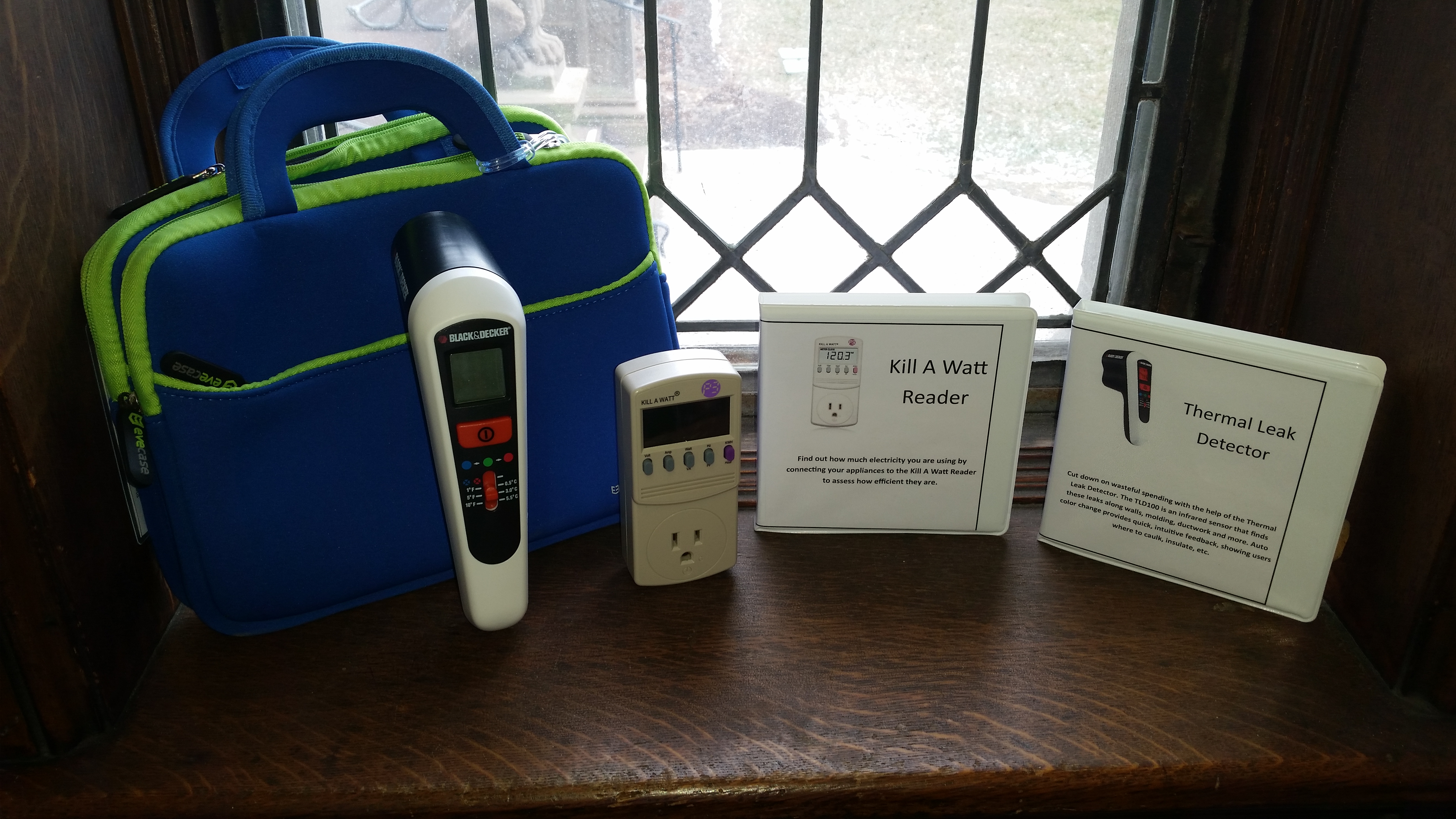
The Albright Memorial Library currently has a Thermal Leak Reader and a Kill A Watt Detector available for patrons to borrow and use in their homes or businesses. These items can be borrowed for one week using your Lackawanna County Library System library card.
Energy.gov breaks down their list of calculators into seven categories: Commercial Heating and Cooling, Residential Heating and Cooling, IT and Electronics, Lighting, Appliances, Food Service, and Other. Under each category, you will find several calculators.
For example, you can see how much energy your heater uses by downloading the Electric and Gas Water Heaters calculator under the Residential Heating and Cooling category. When you click on the link for the calculator, it will open up a form that allows you to add in details about your heater such as how many heaters you have in your home and how long you run it.
Once you fill out all the information, the calculator will give you an estimate of how much energy and money you spend. Energy.gov calculators also allow you to see the money you can save with energy efficient appliances.
UGI has energy calculators that can fill in missing information based off of the average statistics for where you live. Their Home Energy Saver calculator will fill in the average amounts based on your zip code for any questions you cannot answer.
You can access all of these websites through the computers in the reference department. All you need is a library card.
To read more “Go Green” posts, type “Go Green” in the search box at the top of the page.
February is Library Lover’s Month, so to kick off this awesome month, the library is holding a Coloring Contest.
The contest is open to children, teens, and adults. During your next visit to the library, ask for coloring sheets for you and your family at the circulation desk. When you’re done coloring your masterpiece, hand it to a librarian, and we will display them throughout the month. At the end of the month, we will pick one winner from the children, teens, and adults groups to receive a $25 Library Express gift card. Click on the links below to download the coloring sheets.
Share your love for the library throughout the month of February. We’ve counted down some of the best ways:
4. Let us know in the comments why you love your library and we will feature some of them on our website throughout the month.
3. Show your love for the library by following the Lackawanna County Library System on Facebook, Twitter, Instagram, and Flickr.
2. Share with family and friends what you love most about the library. (Anything from our great selection of books, DVDs and Blu Rays or our awesome staff )
1. Visit your local library and sign up for a library card!
#1 sounds simple, but the library wouldn’t be here without the love and support you give us, and that happens every time you visit the library and sign up for a library card.
As winter sets in, more of us will be buying rock salt to clean our driveways and sidewalks. Unfortunately, all of that rock salt can end up in our water supply due to runoff and can even corrode the metal on our cars. Alternative ice melts are not only safer for the environment, but can work just as well as regular rock salt.
HuffPost Green lists alternative ice melts and how they work.
Afalfa Meal—also used as a fertilizer, alfalfa meal melts ice and provides traction due to its grainy texture. It works best when used in moderation.
Organic Salt-free Deicers— Calcium Magnesium Acetate (CMA) is one of the salt-free deicers that has little impact on pets, water, and the environment.
Sugar Beat Juice—melts ice even at temperatures below – 20 ⁰ Celsius/-4 ⁰ Fahrenheit by reducing the melting point of ice and snow.
Urea (also called carbamide)—usually used as a fertilizer, urea acts as a mild ice melt that won’t cause corrosion or break concrete, but it can cause harm to plants due to its high concentration of nitrogen.
Kitty litter, sand, coffee grinds, fireplace ash—while these alternatives won’t melt ice as well, they do create traction for vehicles.
Heated Mats— also an option, but the most expensive. They use electricity to heat, melting snow before it has a chance to turn into ice. The mats can be placed in your driveway, sidewalk, and on the front porch.
You can buy most of these alternative ice melts at your local gardening store, Home Depot, or Walmart. A list of popular alternative ice melt brands include:
Bare Ground (available at Home Depot)
Safe Paw (available at Home Depot)
Earth Organic (available at Walmart)
Espoma (available at Home Depot and Walmart)
You can access all of these online websites on the computers in the reference department. All you need is a library card.
To read more “Go Green with the Library” posts, simply search for “Green” in the search box at the top of the page.
According to Eco-cycle, the majority of people will create 25% more trash during the holiday season. But there are easy ways for you to stay green this holiday season and cut down on waste.
Eco-cycle is one of the largest non-profit recyclers in the United States. Their website has many tips and guides that can make your holiday greener. Here are a few tips they suggest:
Reuse holiday greeting cards by turning them into gift tags or place-setting cards for the next year.
Bring your packing peanuts/bubble wrap to your local packing store (UPS) for them to be reused. You can also save them for your own packing needs.
Look for wrapping paper made from recycled materials so they can be recycled again. Most wrapping papers have a laminate finish or tape making it hard to recycle. Check with your municipality to see if you can recycle wrapping paper with a glossy finish or shine.
Use rechargeable batteries to cut down on the amount of alkaline batteries thrown away.
Use LED holiday lights to save money and energy while decorating your home or business. *Check out our Go Green post on LED holiday lights here.
You can check with your municipality to see the list of holiday items you can recycle.
If you are looking to recycle your old electronics, there are several places where you can drop off items. Best Buy and Staples will recycle many electronics and home appliances. To see their full list, visit www.bestbuy.com and www.staples.com.
Pennsylvania’s department of environmental protection provides a list of locations you can recycle electronics in Lackawanna County. Visit www.dep.pa.gov and click on Electronics Collection Programs.
You can access all of these websites on the computers upstairs in the reference department. All you need is a library card.
To read more articles on how to go green with the library, type the “Go Green” tag in the search box at the top of the page.
 he
he 
 hs draw near, we’ll be using our ovens and stoves more often. It’s no surprise then that the kitchen accounts for 27% of all household energy use.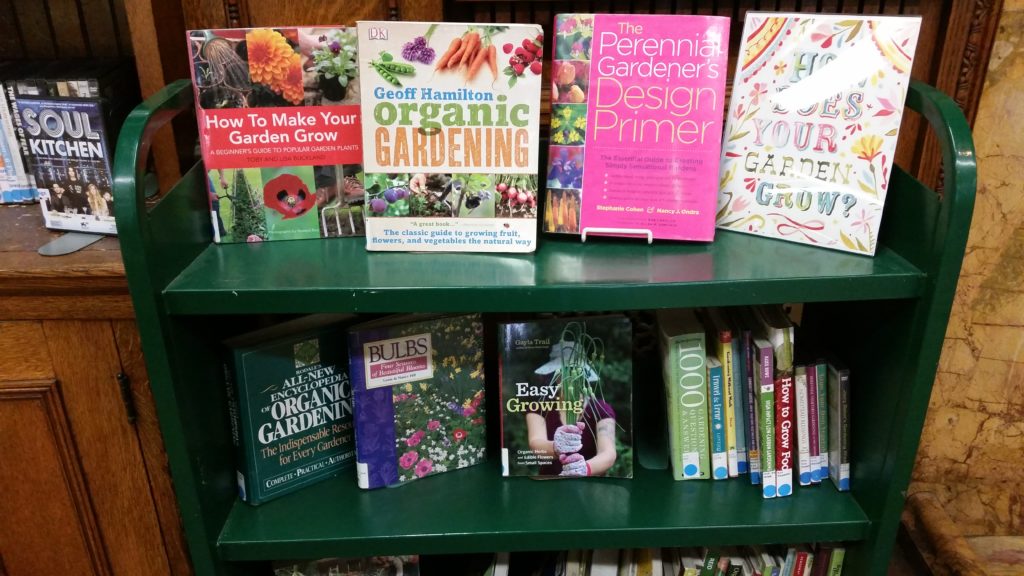
 ring your next visit to the library, ask for coloring sheets for you and your family at the circulation desk. When you’re done coloring your masterpiece, hand it to a librarian, and we will display them throughout the month. At the end of the month, we will pick one winner from the children, teens, and adults groups to receive a $25 Library Express gift card. Click on the links below to download the coloring sheets.
 nd sidewalks. Unfortunately, all of that rock salt can end up in our water supply due to runoff and can even corrode the metal on our cars. Alternative ice melts are not only safer for the environment, but can work just as well as regular rock salt.
 According to